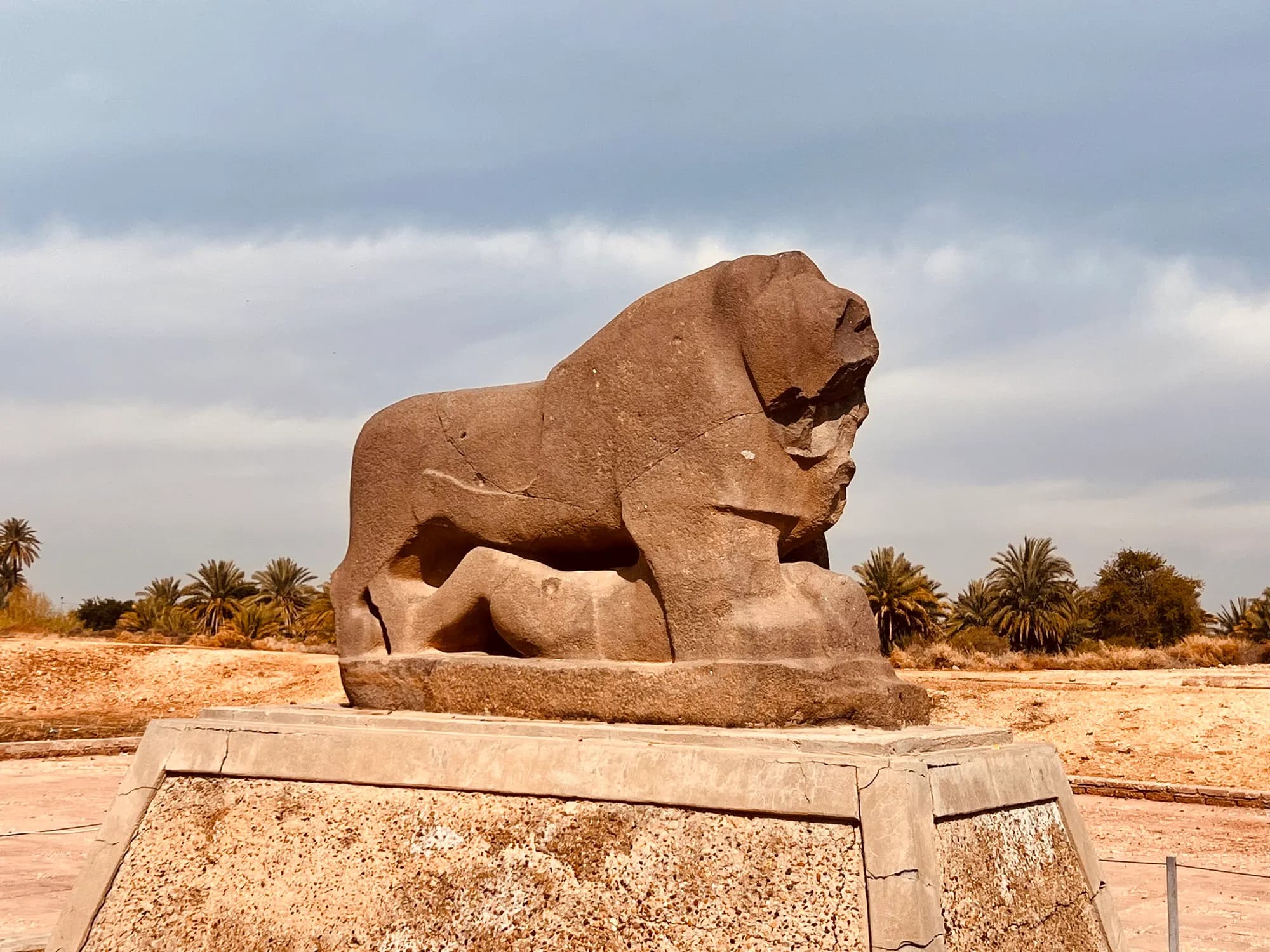
The Lion of Babylon A Symbol of Power and Ancient Mesopotamian Civilization
The Lion of Babylon is one of the most famous historical monuments in Iraq and an iconic symbol of the ancient Babylonian civilization. Located in the archaeological city of Babylon, south of Baghdad, this remarkable sculpture attracts visitors, historians, archaeologists, and tourists interested in the rich history of Mesopotamia. The monument represents a large lion standing over a human figure lying beneath it. This impressive scene is believed to symbolize strength, victory, royal authority, and dominance. The sculpture is carved from black basalt stone and measures approximately 2.6 meters in length and around 2 meters in height, making it one of the most recognizable examples of ancient Babylonian sculpture. The Lion of Babylon is traditionally associated with the Neo-Babylonian period and the reign of King Nebuchadnezzar II, one of the most influential rulers in ancient Mesopotamian history. However, some archaeologists suggest that the sculpture may have Hittite origins, and its exact date and original purpose remain subjects of historical debate. In ancient Mesopotamian culture, the lion represented courage, strength, protection, and royal power. It was also closely associated with Ishtar, the Babylonian goddess of love and war. Lions appeared frequently in Babylonian art, architecture, and religious symbolism. Today, the Lion of Babylon is an important national symbol of Iraq and one of the main attractions within the ancient city of Babylon. Visitors exploring Babylon can also discover the remains of ancient palaces, city walls, temples, and the famous Ishtar Gate. In 2019, Babylon was officially inscribed on the UNESCO World Heritage List, recognizing its outstanding historical and cultural importance. If you are planning a trip to Iraq, visiting the Lion of Babylon is an unforgettable experience. Explore ancient Mesopotamian history and discover Babylon with Adil Sumerian, a licensed tour guide from Baghdad, and enjoy a private guided tour of one of the world’s most remarkable archaeological sites.